TREMBLING AND ECSTASY

TREMBLING AND ECSTASY

TREMBLING AND ECSTASY
Reflections of the Night of the Resurrection

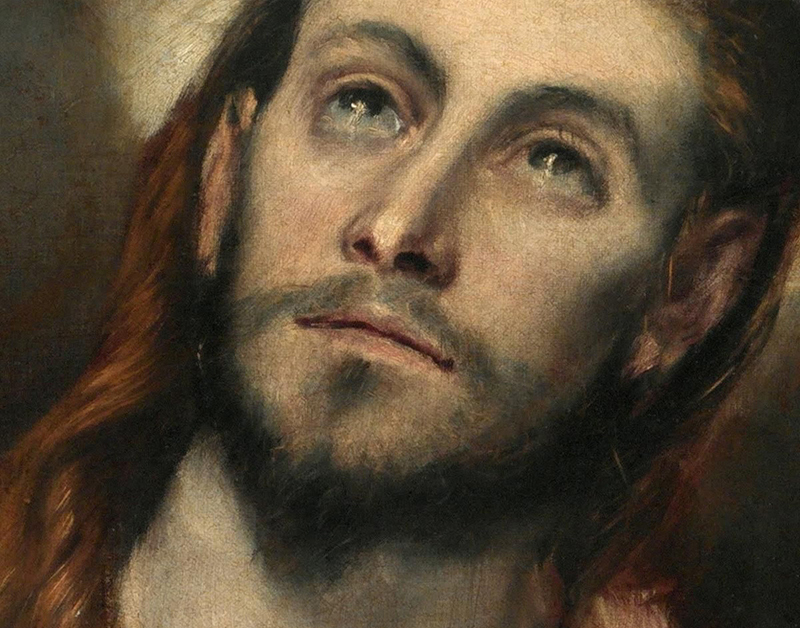
On the night of the Resurrection, before the ‘Christ is Risen’, we recite outside the churches the most succinct, almost incomplete, account of the evangelist Mark, who wrote the first of the Gospels around three decades after the events of the divine dispensation. Three women, the myrrh-bearers—one of whom was most likely Jesus’ mother—depart in haste from the tomb of Jesus, carrying in their hearts the angel’s message: ‘He has risen; He is not here.’ Despite his urging, they say nothing to anyone. They are overcome with ‘trembling and ecstasy’. Thus, abruptly, the Gospel reading ends—with trembling, ecstasy, and the silence of the astounded women.

Trembling, as awe, because they had just taken an unexpected leap into the unknown, and at the threshold of another reality, they had received a word that surpassed the laws of nature and overturned all of history. Along with them our poet Nikos Gatsos sings: ‘Today Hades has been opened, Golgotha has become a bridge, and on the shore of death you follow an ineffable path.’

Ecstasy, as an existential shudder and a forgetting of the self, because suddenly and unexpectedly the shore of death became the boundary between the tangible and the untouchable, where the traces of the dead and risen One create an unutterable passage, introducing a new condition of existence.

Silence—not only because such a subversive message requires rational processing, but also because it stands at the boundary between the spoken and the unspeakable, where one does not know what or how to say. Along with them, St John of Damascus gives voice to the inexpressible: ‘Now all things are filled with light—heaven and earth and the netherworld.’

One wonders whether today’s world can succumb to the same fear, the same ecstasy, the same silence. Our world experiences trembling—not before the resurrection, but before death. And it experiences ecstasy—not from the vision of God, but from the vision of the ego, which eventually becomes our tomb. The dominant ego, detached from nature and from the community of ‘we’; the fragile ego that, through fantasies of grandeur, launches itself into infinity only to shatter into countless pieces—like that old Challenger, which exploded spectacularly as a flying Babel, its fragments dancing unredeemed in space. Space became a tomb. Thus, existentially unredeemed, in the grave of spiritual poverty and pettiness of soul, of vanity and greed, of artificial joy and every kind of addiction and illusion, modern man—guilty and embittered, without mourning or joy—skirmishes with his ultimate enemy, death, yet with a deep, often unspoken hope within him.

This hope seems to revive with the mournful flowers of every Holy Week. The sacred Passion unfolds the full spectrum of human drama, with God Himself as the central figure and great poets as the chorus leaders. Toil, sorrow, anguish, betrayal, injustice, martyrdom, death, burial—behold humanity in the face of the God-man. However, the end is anything but tragic. It is the victory of the buried and life-giving Body over the ultimate enemy, the victory of love over the forces of decay—the only meaningful victory, for it tolerates no defeated part; it swallows up defeat itself.

Perhaps that is why, amid the helplessness of our times, believers and non-believers alike, those who have fasted and those who have not, hasten to hear ‘Christ is Risen’ with a red egg in our pocket, a golden candle in hand, and to relive the expectation: that the tombstone of life, of justice, of goodness and beauty is not the final act of the drama—for the one who suffered, dead and estranged, yet closest to our heart, is the One who painted the earth with flowers.

On every such night, it is not merely religious feeling that is awakened—something that can both solace and deceive. What awakens is the deeper self—soul, body, and senses—which longs to submit to the light. And the entire Church, on such a night, leaves the temples to proclaim to the world what it most desperately needs without realising it: that there is another ineffable route—and it is not the way of success and goal achievement. It is the route of life that leads to the resurrection—the ‘life toward resurrection,’ as Paul Ricoeur would say— that allows us to realise that we have been forgiven and unconditionally loved by God. Only then will every kind of tomb become heaven.

Archimandrite Chrysostom,
Abbot of the Holy Monastery of Faneromeni, Naxos
THE ROAD AND THE HOMELAND

THE ROAD AND THE HOMELAND

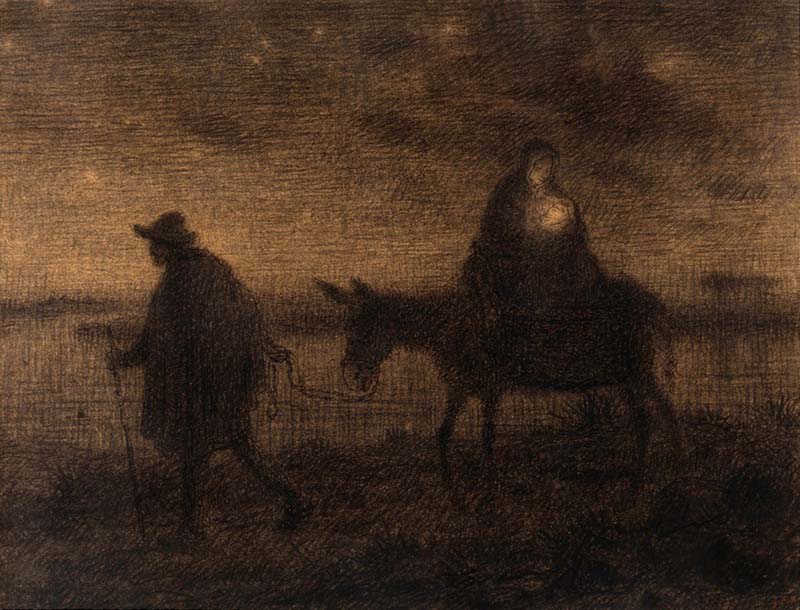
You may describe the narrative of the birth and early years of Jesus as an adventure rather than a colourful story. The presence of God on earth is followed by an enormous turmoil, where the line between the human and the demonic is blurred. The mystery—folly and scandal—is that God endures all of this already in His cradle, from the night the mother finds no place to give birth. His earthly life becomes a journey, exile, movement, and passion. Even if the foxes have dens, he has nowhere to lay his head. He and those who follow Him. The Apostle Paul will repeat, ‘Life is a journey; we do not have a permanent home here.’

And, because life is movement and a journey, both its pleasant and sorrowful moments pass. The travellers feel sorrow when they pass through steep gorges, or delight as they pass through idyllic meadows, but they don’t feel too much of either because they are in a haste to get home. Therefore, Saint John Chrysostom recommends against being dazzled by the pleasant things of this life or overwhelmed by the sorrowful, for all is fleeting on the journey. Even if it is narrow, it is still a road. The same saint felt the journey of exile to his very core—here and there, hundreds of miles of harsh trekking and abuse in the storm and heat—but for him, even the patriarchal throne was a path, not a homeland.

However, there is a danger of mistaking the road with the homeland. Because we tend to regard the present and the instantly tangible as the only reality. If my entire existence is defined by my possessions, my family, my career, the small joys and achievements, my aspirations and dreams, and any accomplishment or victory, then I have identified a point on the road with my homeland. If my ultimate destination is power, whether individual or collective, and my daily concern is worldly power and hegemonies, then I have misidentified the road with my homeland, leaving myself immobilised and trapped in a specific kilometre of the national or provincial road, unforgivably myopic. The situation becomes even worse when the current and immediate observable elements are not part of physical reality, but rather a fictitious paradise or immersion in virtual reality.

Let us recall a strange incident in Christ’s life, in which He refuses to respond to two brothers who request that He serve as an arbitrator in the partition of their father’s estate. Instead, he narrates the parable of the foolish rich man, who, trapped in space and time, believes he will always have, accumulate, eat, and drink because he considers his current pleasure to be immortality, filling a leaky jar in a daze. Until one night, the devil seizes his soul, while the bats or quarrelling heirs seize his warehouses. On the path ahead of us, you only have what you give.

Christ is not established anywhere; He becomes a stranger, a beggar, and a ‘vagabond,’ writes John Chrysostom, to teach us that no ‘institution’ of the present is eternal, that His kingdom is neither of this world nor imposed on this world with worldly weapons, even though a contemporary militant version of Orthodoxy rests on worldly theocracies and blesses mass killings in the name of the ‘good’.

However, this sense of the road, which points towards the sole true homeland and discourages attachment to any geographical or temporal point, does not negate the present. On the contrary, it is light to perceive and utilise the present in its true dimensions. First of all, it is light to recognise our own lack of discernment. ‘Don’t tie your shoes in vain as if you were planting plane trees,’ says a modern Greek poet, Nikos Gatsos. Don’t think your new venture will last forever. Therefore, avoid excessive anxiety, despair, or enthusiasm regarding things of ephemeral nature. What exactly does someone need on the road? Food, blankets, and genuine affection.

However, in the illusions of artificial lights, in the reassuring festivals, or the soaring words devoid of any relevance to God incarnate, we will never confront our wounds. Instead of prosperity, we will accumulate pain and the stench of death, just like now!

Archimandrite Chrysostom,
Abbot of the Holy Monastery of Faneromeni, Naxos
TEMPTATION FROM THE RIGHT

TEMPTATION FROM THE RIGHT

‘Right’ and ‘Left’ don’t only have to do with political alignments. The terms were also used to define two categories of temptation in the spiritual life. Indeed, because it’s less perceptible, the temptation ‘from the right’ was considered the more dangerous.

When does a temptation come from the right and when from the left? Here’s an example. If the devil presents you with the suggestion that you should cheat a co-worker for your own benefit, that’s a temptation ‘from the left’. You know where it’s coming from and you either accept it or reject it. But if the evil spirit whispers that we’re in a crisis, that your co-worker doesn’t have a family and so you’re justified in cheating them for the sake of your children, then that’s a temptation ‘from the right’. In other words, it’s dressed up as a good aim, or, at least, as a necessary evil. It’s a way of concocting pretexts for sins.

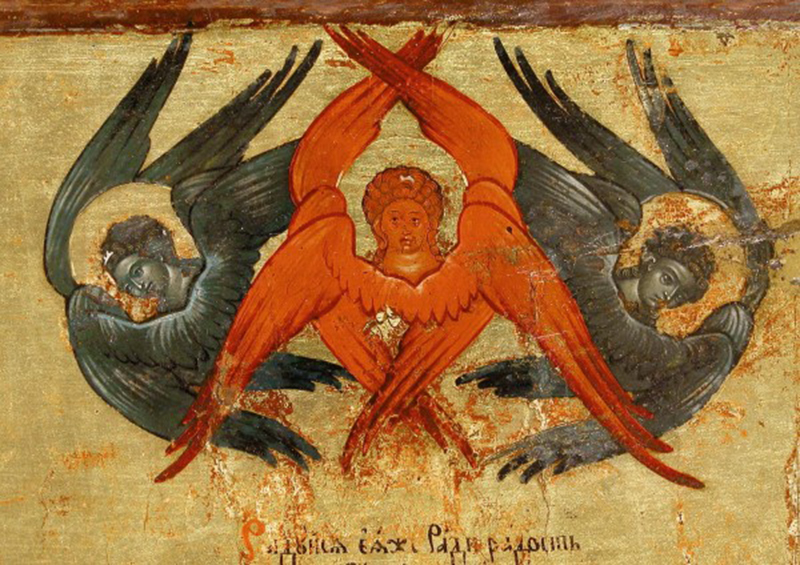
A temptation from the right can be even more ‘holy’. It appears as an angel of light, with pious thoughts and passages from Scripture. It presents a lie to the mind in the guise of the truth. It projects a virtue which, in fact, is wickedness in a mask. Thus, it may introduce ill-will into the soul, clad as defence of the faith. In such a case, the egotists and the intolerant believe that they’re being zealous for God. Or else, it may cultivate laxity and indifference, cloaked as moderation and meekness. People who are uncaring and indolent present themselves as peaceful and meek. On other occasions, cruelty may be passed off as strictness or sincerity. Uncharitable people can come across as upstanding and scrupulous. It can also take on other forms in order to hide its true nature and so can enter the heart like a thief and pillage it.

The desert fathers knew the devil’s machinations very well, which is why they warn us about an even more subtle attack from the right. When the nous reaches the point where it prays fervently, when we feel calm and well-defended, then the demons, who want to disorientate us, attack from the right. They don’t make themselves known, but fabricate praise of God and other things we love. The nous then thinks it’s achieved the purpose of prayer. This is the way the evil one sows the seeds of vainglory and pride in our brain.

Very often, the evil spirit uses truths. It tells ‘the truth’, but not the ‘whole truth and nothing but the truth’. Even occultists can manifest things unseen and ‘prophesy’, claiming to draw on the power of Christ, but they’re integrated with evil and they prophesy what the devil wants them to. This is of particular importance in our own day and age, because superstition has taken root in material societies and is now infiltrating the lives of many, even Christians. Both the saint and the occultist can tell our name or the problem that’s bothering us. But the criterion of holiness is humility and the love which people transmit as natural, fragrant incense.

How do we recognize a temptation from the right? First, there’s a general principle which holds true: If something isn’t from God, the devil will introduce proud thoughts. Secondly, we must bear in mind that very often that which seems absolutely true and right is simply a reflection of our personal will.

Saint Anthony saw the snares of the devil spread out on the ground and wondered who could overcome them. And he heard a voice saying to him: humility. Real, genuine humility is what reveals the snares of the devil. And humility isn’t just thoughts about being humble, nor, of course, sanctimoniousness and an outward show of piety. It’s a deep sense of our condition, that we’re weaker than shadows, that whatever we do and whatever we have isn’t our own.

We ought to mention here, as an example of humility, the encounter between Saint Zosimas and Saint Mary the Egyptian. The former was a venerable abbot who bore the high rank of the priesthood. The latter had previously been a harlot but had then spent the rest of her life in the wilderness and had reached the heights of sanctity. At their unexpected meeting in the desert, nether of them seems to have been aware of their stature and merit. On the contrary, each of them bowed down to the ground, in a show of respect for the other and each asking the other’s blessing. It was humility which came from two simple hearts. And a simple heart always compares itself not to others but to the infinite purity and sanctity of God. When the soul is illumined through veneration, it’s then able to discern where a thought, a feeling or an inclination is coming from.

Essentially, humility is expressed with the spirit of being under tutelage. The Cappadocian Father, Saint Gregory, was called the Theologian, but referred to himself as a life-long pupil. And the desert fathers never accepted any revelation without first subjecting it to the scrutiny of other, more experienced monks. God’s truth is revealed through a life-time of tutelage and love.

There are some who believe external deeds, an external calmness, or a rudimentary (or alleged) struggle for the faith makes them teachers, counselors and judges of the whole world. They can say ‘Forgive me’ or ‘I, the sinner’ as much as they want, but they don’t mean it. There’s no greater temptation than to think that our struggle and our faith give us the right to act as the touch-stone for Orthodoxy or as religious inquisitors. It’s strange and much to be wondered at how often the extent to which we confess our faith or defend tradition is anchored in the most uncompromising egotism. When there’s no real humility, the heart becomes as hard as flint and sinks into the abyss of obdurate opinion, sometimes even of ingratitude. And that is what we call delusion.

Archimandrite Chrysostomos
Abbot of the Holy Monastery of Faneromeni, Naxos

(Excerpt from a talk)